
Office Address
4th Floor, College House
University Way, Nairobi, Kenya
Phone Number
+254 721 827 030
0700 348 238
Email Address
info@ackers.co.ke
4th Floor, College House
University Way, Nairobi, Kenya
+254 721 827 030
0700 348 238
info@ackers.co.ke











 by Joan Blessing
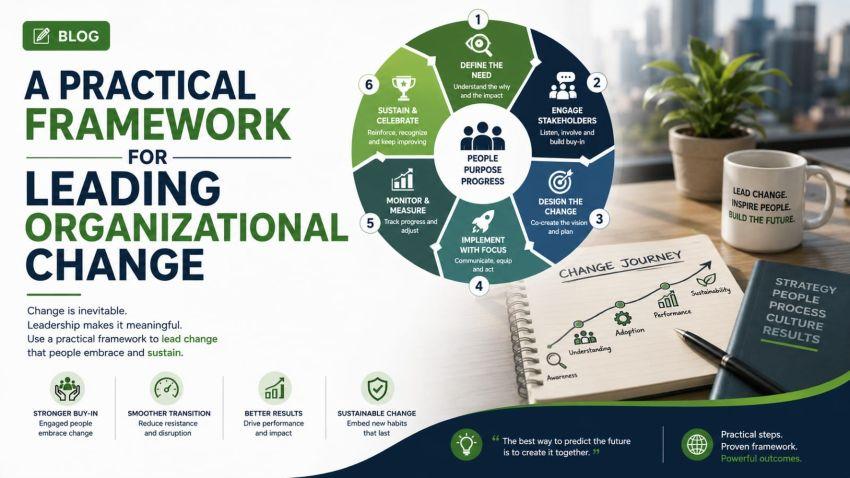
Whether it's adopting new technology, restructuring departments, or shifting organizational culture, change initiatives share a common failure pattern: the strategy looks sound on paper, but execution stalls because people — not processes — resist it. Leading change well is less about the plan itself and more about how deliberately you manage the human side of it.
Step 1: Start with a real risk assessment, not just a rollout plan
Before any change initiative launches, identify the specific risks it introduces — financial, operational, legal, reputational, and technological — and honestly assess their likelihood and impact. Skipping this step is the single most common reason change initiatives get blindsided by problems that were, in hindsight, predictable.
Step 2: Build risk mitigation into the design, not as a fallback
Once risks are identified, develop the policies, processes, and controls needed to minimize exposure and protect business continuity from day one — not after something goes wrong. This includes compliance checks to ensure the change doesn't inadvertently breach laws, regulations, or industry standards.
Step 3: Design the change strategy deliberately — don't wing the "how"
A structured approach to organizational change — whether it's a culture shift, a technology rollout, or a process transformation — needs to be designed with the same rigor as a financial plan. Vague change strategies ("we'll figure it out as we go") consistently underperform structured ones.
Step 4: Treat stakeholder communication as a core workstream, not an afterthought
This is where most change initiatives actually fail. Communication with employees, clients, and partners needs active management to ensure smooth adoption and reduced resistance — not a single all-staff email announcing the change is happening. People resist what they don't understand, and they especially resist what they feel was imposed on them without explanation.
Step 5: Monitor continuously and be willing to adjust
Change management doesn't end at rollout. Tracking risk responses and change initiatives, measuring their effectiveness, and making adjustments as needed is what separates organizations that build genuine resilience and adaptability from those that experience "change fatigue" — repeatedly launching initiatives that never fully take hold.
A note on regulatory and compliance risk
Any significant organizational change should be checked against regulatory compliance requirements before implementation, not audited for compliance after the fact. This is especially true for organizations in regulated sectors — financial services, cooperatives, and public institutions — where a well-intentioned change can create unintended compliance exposure.
Leading change successfully isn't about having the perfect strategy — it's about disciplined execution: assessing risk honestly, building mitigation into the design, communicating deliberately with the people affected, and monitoring continuously. At Ackers Institute of Management, our Risk & Change Management training equips leaders with this practical framework, grounded in real organizational risk identification, mitigation planning, and stakeholder engagement.